
AI put "synthetic quotes" in his book. But this author wants to keep using it.
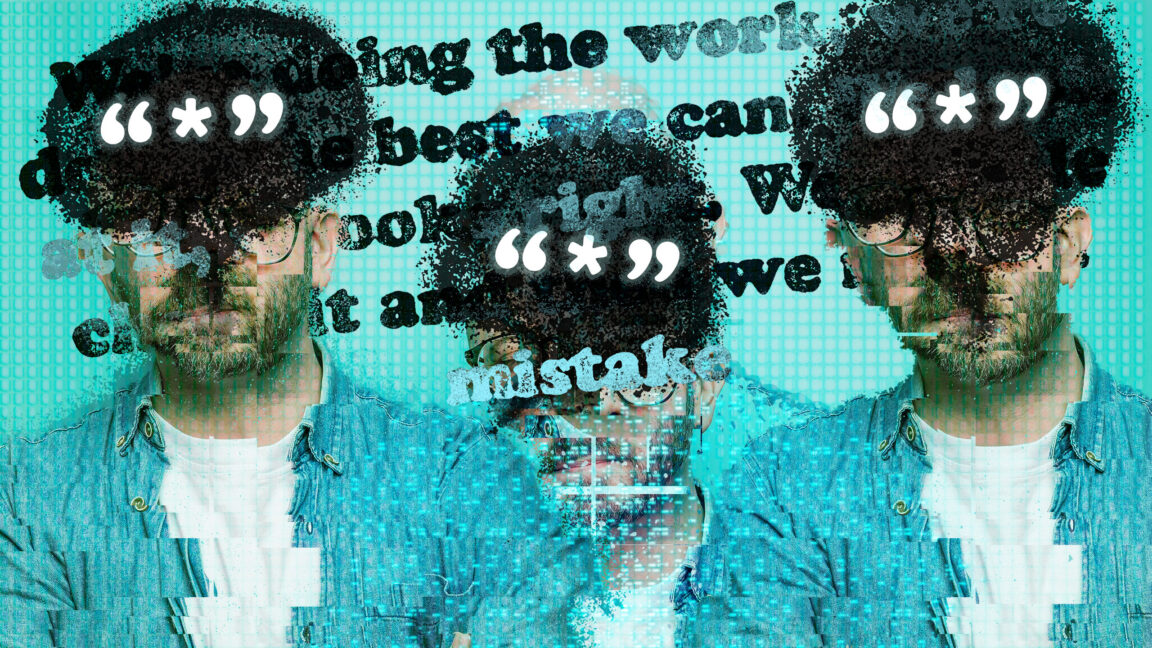
Author Steven Rosenbaum used AI tools for research for his new book, "The Future of Truth: How AI Reshapes Reality," which led to the New York Times finding "synthetic quotes" that were improperly attributed. Rosenbaum acknowledges the error, but still believes AI is a "magical" and indispensable tool for research, saying he cannot envision returning to an AI-free writing process. The controversy has sparked a necessary discussion about implementing new verification workflows to handle AI-assisted research and the challenges it poses to traditional fact-checking processes in publishing.
Journalist and author Steven Rosenbaum faced controversy when a New York Times investigation revealed "synthetic quotes" in his new book, "The Future of Truth: How AI Reshapes Reality." Rosenbaum acknowledges that his use of AI research tools led to improperly attributed or fabricated quotes, some of which were explicitly denied by the individuals to whom they were attributed. He is currently working on a "citation audit" to correct future editions of the book. Despite this setback, Rosenbaum remains committed to using AI in his research and writing process. He describes AI as "magical" for its ability to connect ideas and provide new avenues for thought that he wouldn't discover on his own. He maintains that while AI assists with surfacing ideas and summarizing themes, the actual reporting, narrative, interviews, and conclusions in his book are entirely his own. Rosenbaum clarifies that he used tools like OpenAI's ChatGPT and Anthropic's Claude to gather information, tagging any AI-generated notes with a warning to distinguish them. These notes were then passed to a fact-checker and two copy editors. Out of 285 citations, six were identified as problematic by the Times, including three "synthetic quotes" with no apparent source. The incident highlights a critical challenge for traditional fact-checking, which is often ill-equipped to verify AI-assisted research. The assumption that quotes from cited works are directly copied is invalidated when AI tools are involved, necessitating an additional layer of skepticism. This issue is compounded by financial pressures on newsrooms and publishers, leading to cuts in fact-checking and copy-editing departments. Rosenbaum agrees that publishers need new verification workflows tailored for the AI era, including mandatory source tracing and clearer standards for AI-assisted research. He emphasizes that he did not intend to fabricate anything, but rather, the AI-generated information, which appeared authoritative, unfortunately made its way into the book. This incident reflects a growing trend of AI-generated errors in various fields, underscoring the urgent need for enhanced scrutiny and robust verification processes.
Related articles
When the Trump administration cracks down on Anthropic, who benefits?
The Trump administration issued an export control order against Anthropic, forcing the AI company to pull its newest models, Fable 5 and Mythos 5, offline. This move has sparked debate over AI policy and digital sovereignty, with some suggesting political motivations and others questioning Anthropic’s own messaging around AI safety.
Signal’s Meredith Whittaker wants you to remember that AI chatbots ‘are not your friends’
Signal President Meredith Whittaker cautions against the over-reliance on AI chatbots, emphasizing they are not sentient and can pose significant privacy risks. She highlights concerns about pervasive data access when integrating AI into personal and sensitive applications.
 Ethics & Society
Critical Copilot vulnerability allowed hackers to seal 2FA code from users
Microsoft patched a critical vulnerability in its M365 Copilot AI platform that allowed attackers to extract sensitive data, including 2FA codes, from users. This vulnerability, dubbed "SearchLeak," exploited Copilot's inability to distinguish between user instructions and malicious commands embedded in third-party content.