Microsoft's Project Solara is an Android OS designed for agents instead of apps
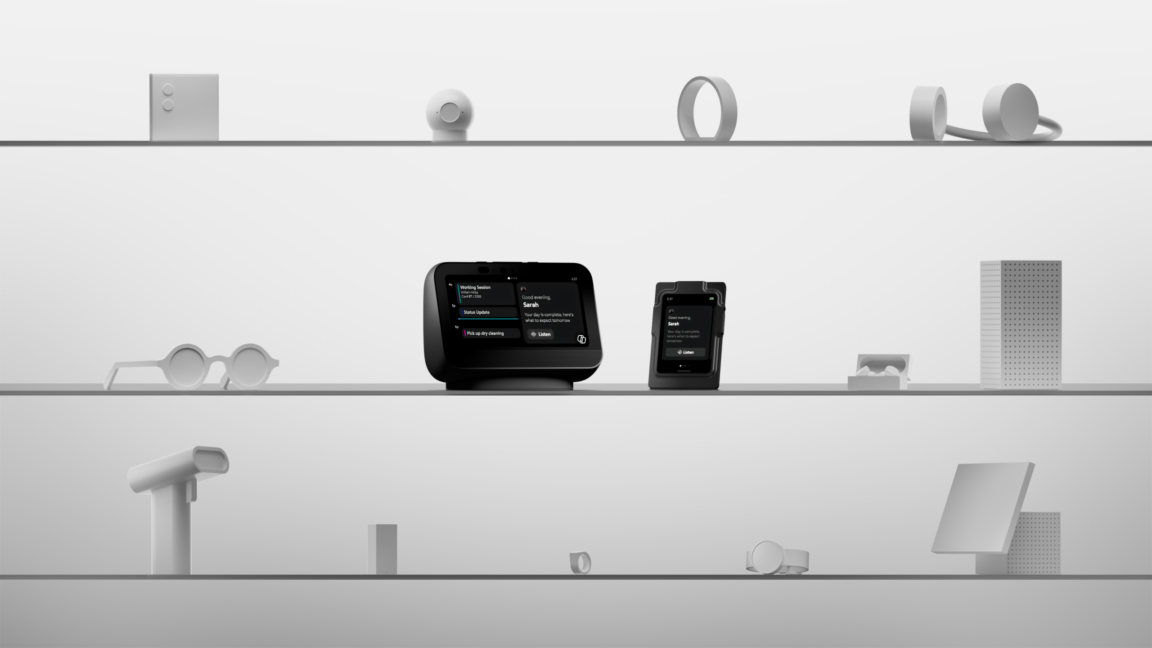
Microsoft unveiled Project Solara, an Android-based operating system designed for AI agents rather than traditional apps. This innovative platform aims to power specialized devices with dynamic interfaces generated on demand by AI, marking a significant shift in how we interact with technology. Solara is currently a concept, with Microsoft demonstrating prototype devices like the Desk Concept and Badge Concept to illustrate its vision for an agent-first future.
Microsoft, deeply committed to generative AI, has introduced Project Solara, a new software platform built on Android. Solara is designed to run AI agents instead of conventional applications, aiming to revolutionize how users interact with various devices. This initiative reflects Microsoft's ongoing investment in artificial intelligence, even as its partnership with OpenAI has faced fragmentation. This is an interesting pitch for how we might actually use AI agents, and it’s not coming totally out of left field. Google is also pursuing agentic interfaces in its search products. At I/O, Google previewed new agent-first search tools that can instantly build dashboards and mini-apps based on your search queries. It’s important to note that Solara is still in its conceptual phase, with no immediate plans for consumer release. Microsoft is currently developing prototype hardware and software, awaiting the emergence of advanced AI agents to fully realize Solara's potential. The company emphasizes that this platform is a "chip-to-cloud" solution, intended to free AI agents from being tied to single interfaces. To demonstrate Solara's capabilities, Microsoft showcased two concept devices. The more conventional Desk Concept resembles a smart display, providing information from AI agents and capable of functioning as a secondary monitor or a standalone Windows PC. The more unusual Badge Concept, a smart work badge with a touchscreen and connectivity, envisions biometric-authenticated access to personal AI agents, capable of summarizing meetings and interacting with the environment. Microsoft's ambition with Solara is to create "just-in-time UI," where agents generate interfaces dynamically based on the device and context. For example, a work badge could display a minimal interface with essential functions, while a smart display would offer more comprehensive data. This approach aims to simplify interface design across diverse form factors. As vague and pie-in-the-sky as Project Solara may be, Microsoft is pretty in tune with the rest of big tech’s AI plans. If any of it works, we can only hope it doesn’t lead to a new generation of touchscreen millstones around our necks. Ultimately, Microsoft’s Project Solara represents a significant endeavor to pioneer an agent-first computing paradigm. While currently a vision, it highlights the company's strategic shift towards leveraging AI to create more intuitive and adaptive technological experiences. Microsoft plans to further develop Solara with industry partners, signaling its commitment to shaping the future of AI-driven interactions.
Related articles
Build real agentic apps using CUGA: two dozen working examples on a lightweight harness
CUGA, IBM's open-source Agent Harness, simplifies building agentic applications by handling infrastructure, allowing developers to focus on tools and prompts. It offers pre-assembled components for planning, execution, and state management, significantly reducing development time. CUGA has topped agent benchmarks like AppWorld and WebArena.
OpenAI launches new initiative to help find and patch open source bugs
OpenAI has launched "Patch the Planet," a new initiative in partnership with cybersecurity firm Trail of Bits, to enhance the security of open-source projects. This program aims to assist maintainers in identifying and patching bugs, utilizing OpenAI's AI-powered security tools while reducing the burden on project teams.
PP-OCRv6 on Hugging Face: 50-Language OCR from 1.5M to 34.5M Parameters
Baidu has released PP-OCRv6, an advanced optical character recognition (OCR) model supporting 50 languages. Available on Hugging Face, this version significantly improves accuracy and efficiency across various parameter sizes, from 1.5 million to 34.5 million, marking a substantial leap in multilingual OCR technology.