
Pokémon Go players unwittingly contributed to tech with military drone uses
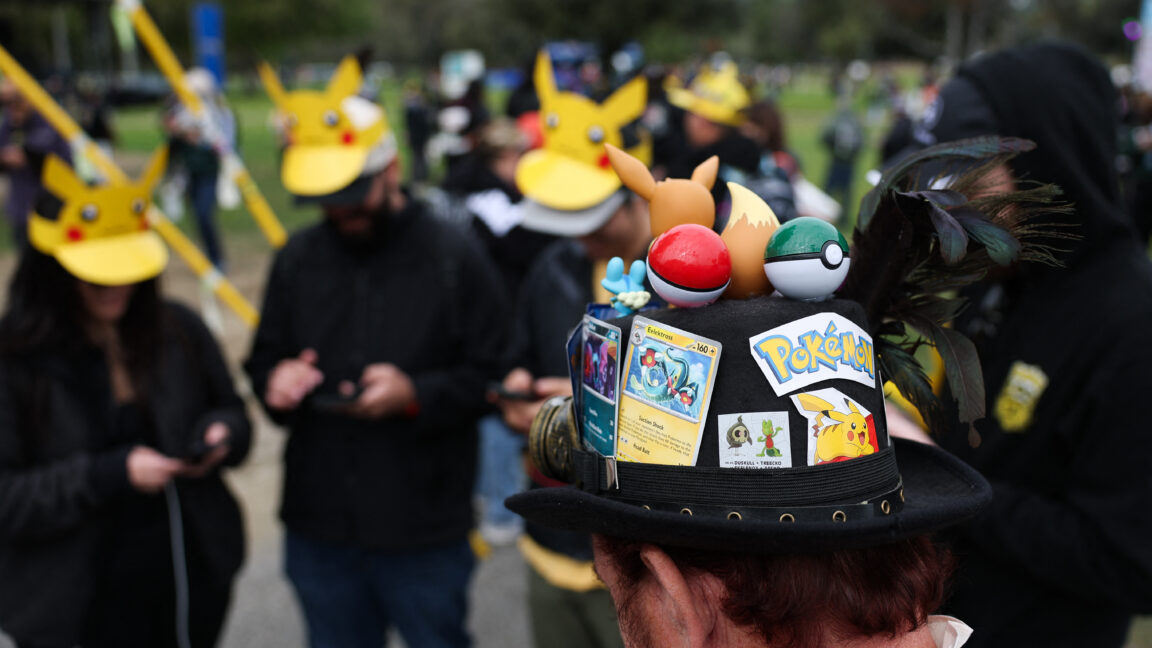
An AI company spun off from Pokémon Go developers used player-contributed scans to create a 3D world model. This technology is now being utilized for delivery robots and has potential applications in military drones, raising ethical concerns among some players. The company maintains that player contributions were voluntary and that their privacy policies were transparent.
An AI company, Niantic Spatial, has utilized billions of real-world images contributed by millions of Pokémon Go players to develop advanced navigation technologies. These technologies are crucial for autonomous delivery robots and are being explored for military drone applications. The data, collected over a decade, formed a "large geospatial model" – a detailed 3D representation of the physical world.
Niantic Spatial, which spun out from Pokémon Go developer Niantic, clarified that "ground scans" were an entirely optional feature within the game. Users voluntarily created short videos of public locations, and the company maintains transparency regarding the use of these scans to improve its technology platform since 2019.
This extensive dataset allowed Niantic Spatial to develop a visual positioning system (VPS). This technology provides precise location and orientation by comparing camera visuals with detailed 3D maps, proving especially useful in environments where GPS is unreliable or jammed.
While initially partnering with Coco Robotics for delivery robots, Niantic Spatial also entered a deal with Vantor, a spatial intelligence company with US government and military contracts. This partnership aims to develop a comprehensive positioning system for drones and ground vehicles in GPS-denied environments. Tests showed significant reductions in positioning error.
The involvement of player data in military applications has sparked ethical concerns. Critics argue that consent given for a game does not equate to consent for contributing to military technology, even if the end use might be deemed defensible in certain contexts, such as by the Ukrainian military.
Despite assurances from Vantor and Niantic Spatial that no direct Pokémon Go game data is being shared for military purposes, some players remain uneasy about the indirect contribution of their gameplay to such sensitive applications.
Related articles
When the Trump administration cracks down on Anthropic, who benefits?
The Trump administration issued an export control order against Anthropic, forcing the AI company to pull its newest models, Fable 5 and Mythos 5, offline. This move has sparked debate over AI policy and digital sovereignty, with some suggesting political motivations and others questioning Anthropic’s own messaging around AI safety.
Signal’s Meredith Whittaker wants you to remember that AI chatbots ‘are not your friends’
Signal President Meredith Whittaker cautions against the over-reliance on AI chatbots, emphasizing they are not sentient and can pose significant privacy risks. She highlights concerns about pervasive data access when integrating AI into personal and sensitive applications.
 Ethics & Society
Critical Copilot vulnerability allowed hackers to seal 2FA code from users
Microsoft patched a critical vulnerability in its M365 Copilot AI platform that allowed attackers to extract sensitive data, including 2FA codes, from users. This vulnerability, dubbed "SearchLeak," exploited Copilot's inability to distinguish between user instructions and malicious commands embedded in third-party content.