
Send the arXiv AI-generated slop, get a yearlong vacation from submissions
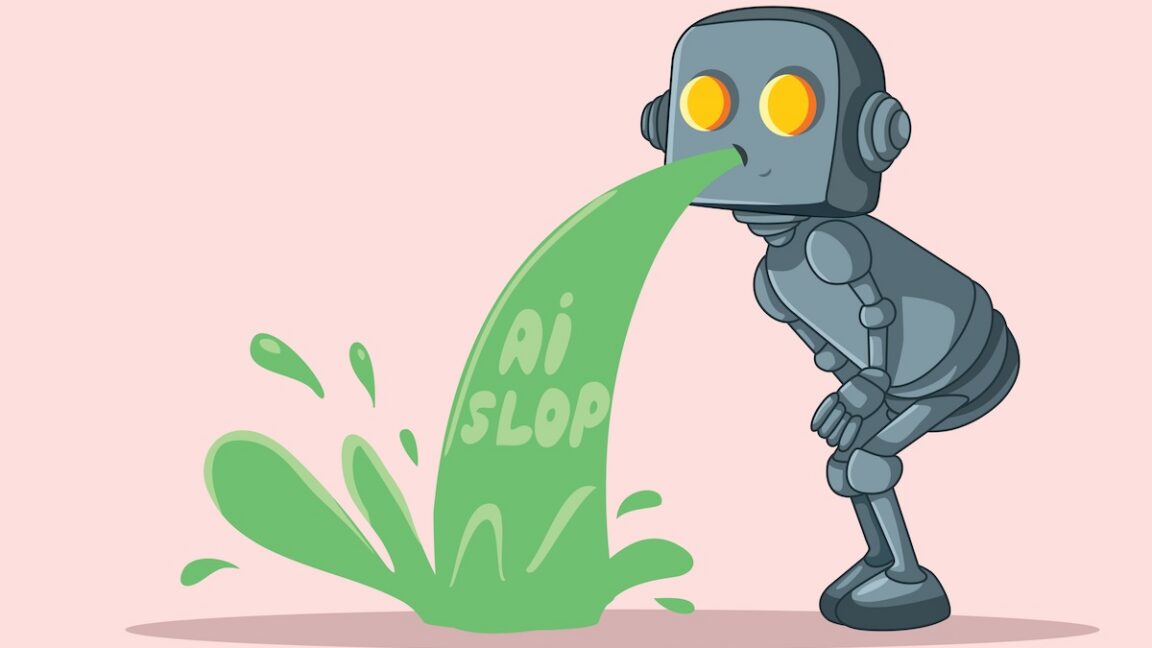
The scientific preprint server arXiv is implementing strict new rules against AI-generated content. Submitting inappropriate AI-produced material will result in a one-year ban for all authors and mandatory peer review for future submissions.
The scientific preprint server arXiv is taking a firm stance against the submission of AI-generated content that fails to meet scholarly standards. This move comes as AI-produced "slop," including fake citations and nonsensical diagrams, has increasingly appeared in academic submissions. The new policy aims to curb the spread of such material.
Thomas Dietterich, an emeritus professor at Oregon State University and a member of arXiv's editorial advisory council, announced the updated policy. He emphasized that all authors are responsible for the content of their manuscripts and must adhere to "appropriate standards of scholarly communication."
Under the new rules, any submission found to contain inappropriate AI-generated material will lead to severe penalties. All listed authors will face a one-year ban from submitting to arXiv. Furthermore, any future manuscripts from these authors will only be accepted after they have successfully undergone peer review by a journal.
For scientific fields heavily reliant on arXiv for sharing preprints, these sanctions are significant. The platform is crucial for early dissemination and feedback, making a submission ban a considerable impediment to researchers' work. The policy underscores the importance of careful preparation and ethical conduct in academic publishing.
Related articles
When the Trump administration cracks down on Anthropic, who benefits?
The Trump administration issued an export control order against Anthropic, forcing the AI company to pull its newest models, Fable 5 and Mythos 5, offline. This move has sparked debate over AI policy and digital sovereignty, with some suggesting political motivations and others questioning Anthropic’s own messaging around AI safety.
Signal’s Meredith Whittaker wants you to remember that AI chatbots ‘are not your friends’
Signal President Meredith Whittaker cautions against the over-reliance on AI chatbots, emphasizing they are not sentient and can pose significant privacy risks. She highlights concerns about pervasive data access when integrating AI into personal and sensitive applications.
 Ethics & Society
Critical Copilot vulnerability allowed hackers to seal 2FA code from users
Microsoft patched a critical vulnerability in its M365 Copilot AI platform that allowed attackers to extract sensitive data, including 2FA codes, from users. This vulnerability, dubbed "SearchLeak," exploited Copilot's inability to distinguish between user instructions and malicious commands embedded in third-party content.