The Fitbit Air is a good wearable weighed down by a chatty AI "coach"
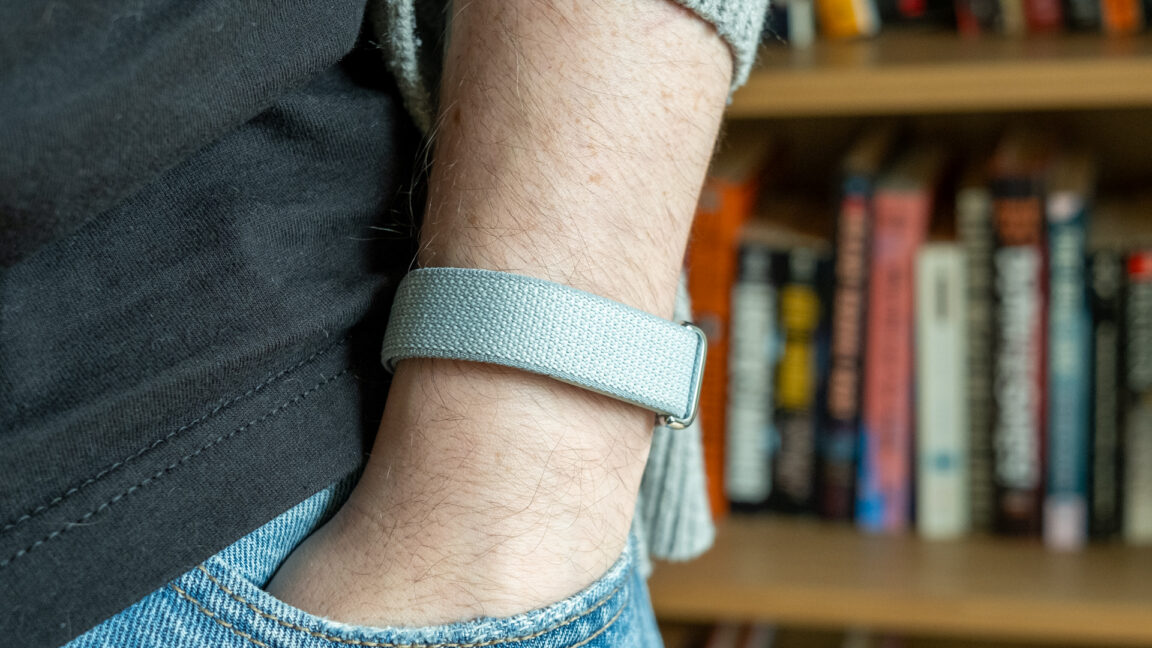
The Fitbit Air is a minimalist health tracker with extensive sensors and a week-long battery life. However, its value is diminished by Google's intrusive AI Health Coach, which comes with a premium subscription and often provides unhelpful or inaccurate information.
The Fitbit Air is a streamlined health tracker designed for continuous wear. It lacks a screen but tracks steps, heart rate, blood oxygen, and skin temperature. Its minimalist design means it's barely noticeable on the wrist, and it boasts a full week of battery life, making it suitable for all-day and all-night wear.
The device integrates with the new Google Health app, logging workout data and providing various health metrics. While convenient for new users, long-time Fitbit enthusiasts might miss features like blood pressure tracking or custom meal creation. Google has indicated that updates addressing some of these concerns are forthcoming.
A significant aspect of the Fitbit Air experience is the AI-powered Health Coach, a premium feature driven by a Gemini-based model. This coach offers health summaries and suggestions tailored to your data. However, it can sometimes "hallucinate" workouts or miss data that is clearly present elsewhere in the app.
Users can customize the coach's behavior by providing contextual information, such as travel plans or personal commitments, leading to more accurate insights. Despite continuous tuning, the fundamental issues with generative AI persist, impacting the reliability of the Health Coach.
Related articles
Build real agentic apps using CUGA: two dozen working examples on a lightweight harness
CUGA, IBM's open-source Agent Harness, simplifies building agentic applications by handling infrastructure, allowing developers to focus on tools and prompts. It offers pre-assembled components for planning, execution, and state management, significantly reducing development time. CUGA has topped agent benchmarks like AppWorld and WebArena.
OpenAI launches new initiative to help find and patch open source bugs
OpenAI has launched "Patch the Planet," a new initiative in partnership with cybersecurity firm Trail of Bits, to enhance the security of open-source projects. This program aims to assist maintainers in identifying and patching bugs, utilizing OpenAI's AI-powered security tools while reducing the burden on project teams.
PP-OCRv6 on Hugging Face: 50-Language OCR from 1.5M to 34.5M Parameters
Baidu has released PP-OCRv6, an advanced optical character recognition (OCR) model supporting 50 languages. Available on Hugging Face, this version significantly improves accuracy and efficiency across various parameter sizes, from 1.5 million to 34.5 million, marking a substantial leap in multilingual OCR technology.