
$130 billion in data center projects blocked by protests so far this year
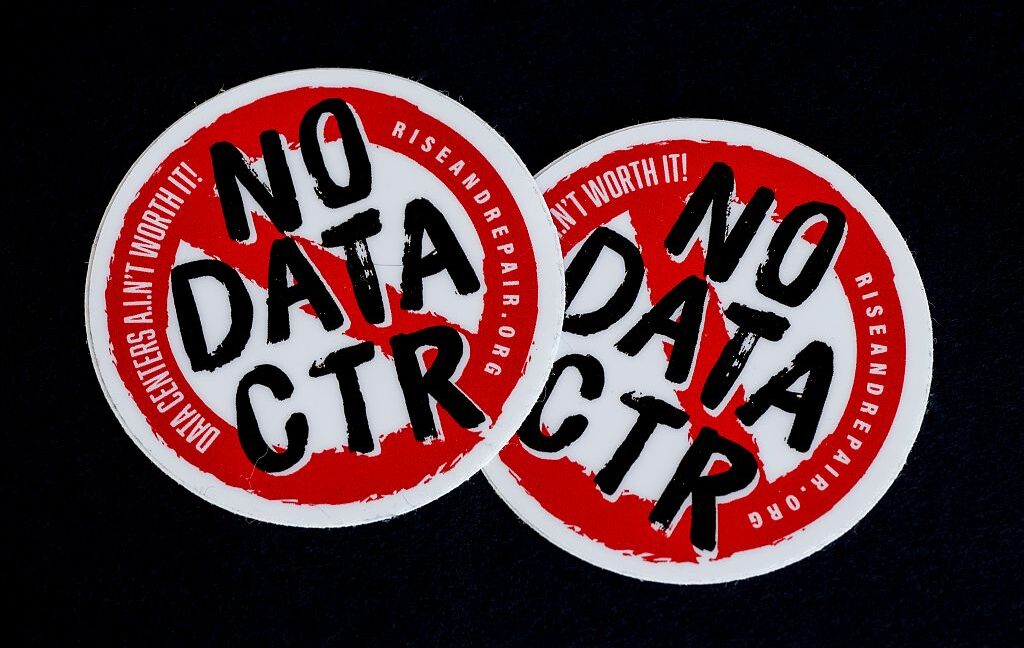
Data center projects worth $130 billion were blocked or delayed in the first quarter of 2026 due to growing community opposition. This marks a significant "structural shift" as local groups increasingly employ effective strategies against new developments. This pushback is influencing elections and reshaping data center viability nationwide, as communities organize around environmental and quality-of-life concerns. The trend reflects a broader citizen engagement with political issues that extends beyond typical local zoning disputes. Sociologist Tressie McMillan Cottom notes how this movement, driven by diverse groups and fueled by shared grievances, is becoming a potent force in American politics.
Community opposition significantly impacted data center construction, with $130 billion in projects blocked or delayed in the first quarter of 2026. This period, from January through March, saw the most significant resistance on record, according to Data Center Watch. Researchers suggest this is not a temporary surge but a "structural shift," as communities have developed effective strategies to oppose these developments. This growing resistance is influenced by an increase in opposition groups, which have more than doubled to 833 across 49 states. Their concerns often focus on water rights, land use, and the potential for increased utility costs and noise.
The political momentum generated by these protests is expected to play a role in upcoming elections. Both political parties are increasingly sympathetic to the resistance as opposition intensifies, indicating a broader recognition of these local concerns at a national level. Sociologist Tressie McMillan Cottom highlights how people from diverse political backgrounds are uniting to oppose local construction projects, attending political education sessions to understand the issues more deeply. She notes that residents are experiencing a new sense of political power by organizing and working together to overcome shared adversity.
Historically, officials faced criticism for signing data center deals without community consultation. Now, however, the backlash often occurs even before projects are officially filed, with mere rumors of a data center being enough to trigger organized resistance. This shift has made it challenging for officials hoping to rapidly build data centers to advance AI initiatives. Developers and officials are now actively seeking ways to counter the rising dissent.
In response to the growing opposition, some data center proponents argue that concerns over electricity and water are overstated, particularly in areas not facing drought or grid strain. They also emphasize the long-term economic benefits, such as job creation and the attraction of AI-related businesses. For example, Loudon County, Virginia, a significant data center hub, generates almost half of its property tax revenue from data centers, despite them occupying only a small percentage of the county's land. This financial incentive is a key argument used by proponents to highlight the positive impact of data centers on local economies.
Related articles
We Added Too Many Guardrails and Broke Our Own Agent, Our AI VP of Finance Found a Setting We’d Missed for 8 Years, and an Agent Is Now the One Renewing Your Software: The Agents #007
This article discusses the complexities and unexpected breakthroughs encountered while deploying AI agents in a business setting. It highlights the critical balance in setting guardrails for AI, the diverging behaviors of agents across different platforms, and the surprising efficiency gains from integrating AI with existing financial tools.
Fika Jobs raises $4M to build a video-first hiring platform where AI agents interview candidates
Fika Jobs, a Stockholm-based startup, secured $4 million in pre-seed funding to advance its video-first hiring platform. This platform uses AI agents to conduct interviews and create short video profiles for job seekers, aiming to revolutionize the traditional recruitment process.
 Business & Startups
How to burst the AI bubble: Strike at its roots
Cory Doctorow