
Desperate Trump taps "Tim Apple," Jensen Huang, Elon Musk to attend Xi summit
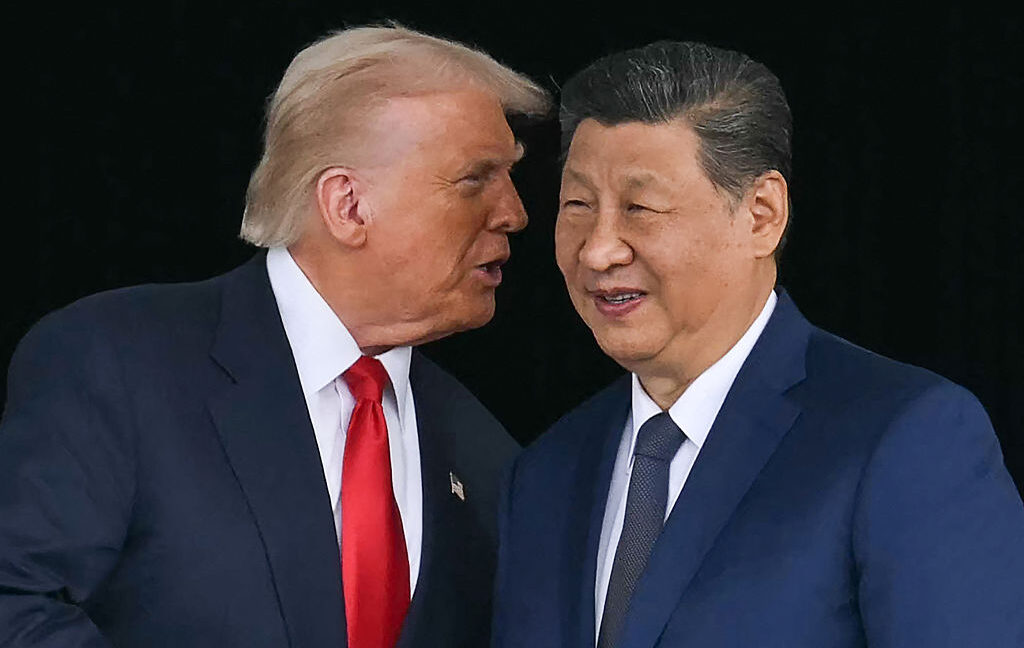
Facing limited leverage in talks with China, Donald Trump invited top US tech CEOs, including Tim Cook, Elon Musk, and Jensen Huang, to a summit with Xi Jinping. This move aims to project strength and leverage the tech sector, despite concerns from experts about potential concessions to China, particularly regarding US technological advantage and Taiwan.
Donald Trump, facing a perceived lack of leverage in upcoming meetings with Chinese leader Xi Jinping, has invited prominent US tech executives to join him. This move is seen as an attempt to project strength and underscore America's technological prowess. Among the attendees are Tim Cook of Apple, Elon Musk of SpaceX, and Jensen Huang of Nvidia. Some analysts suggest Trump aims to remind China of its reliance on US technology and deter aggressive stances. This also enables his personal brand of transactional diplomacy.
Experts, including Scott Kennedy from CSIS, highlight the complex interdependence between the US and China, especially in the crucial AI race. While China holds leverage, particularly in rare-earth exports, the US possesses a significant advantage in advanced chips through companies like Nvidia. The inclusion of AI risks on the summit agenda after China blocked a tech acquisition further underscores the strategic importance of this sector.
However, Trump's strategy has drawn criticism. Concerns have been raised by "China hawks" in Washington who fear that Trump might make concessions that could bolster China's military and AI capabilities. Chris McGuire of the Council on Foreign Relations specifically questioned the invitation of Nvidia CEO Jensen Huang, arguing that increased chip sales to China could diminish the US's lead in AI.
A critical point of contention in the summit is Taiwan. Xi Jinping is expected to press Trump on Taiwan's status, seeking a shift in US policy. Michael Schiffer of the Center for American Progress notes Trump's inconsistent stance on Taiwan, which creates uncertainty for both Beijing and Taipei. Trump's past actions, such as accusing Taiwan of stealing the US semiconductor industry while also providing military aid, illustrate this unpredictability. Schiffer warns that this "strategic flip-flopping" conveys a dangerous message, suggesting Taiwan's security could be a negotiable asset, and risks heightening regional instability.
Related articles
We Added Too Many Guardrails and Broke Our Own Agent, Our AI VP of Finance Found a Setting We’d Missed for 8 Years, and an Agent Is Now the One Renewing Your Software: The Agents #007
This article discusses the complexities and unexpected breakthroughs encountered while deploying AI agents in a business setting. It highlights the critical balance in setting guardrails for AI, the diverging behaviors of agents across different platforms, and the surprising efficiency gains from integrating AI with existing financial tools.
Fika Jobs raises $4M to build a video-first hiring platform where AI agents interview candidates
Fika Jobs, a Stockholm-based startup, secured $4 million in pre-seed funding to advance its video-first hiring platform. This platform uses AI agents to conduct interviews and create short video profiles for job seekers, aiming to revolutionize the traditional recruitment process.
 Business & Startups
How to burst the AI bubble: Strike at its roots
Cory Doctorow