
GM installs robots at flagship EV factory after laying off 1,300 workers
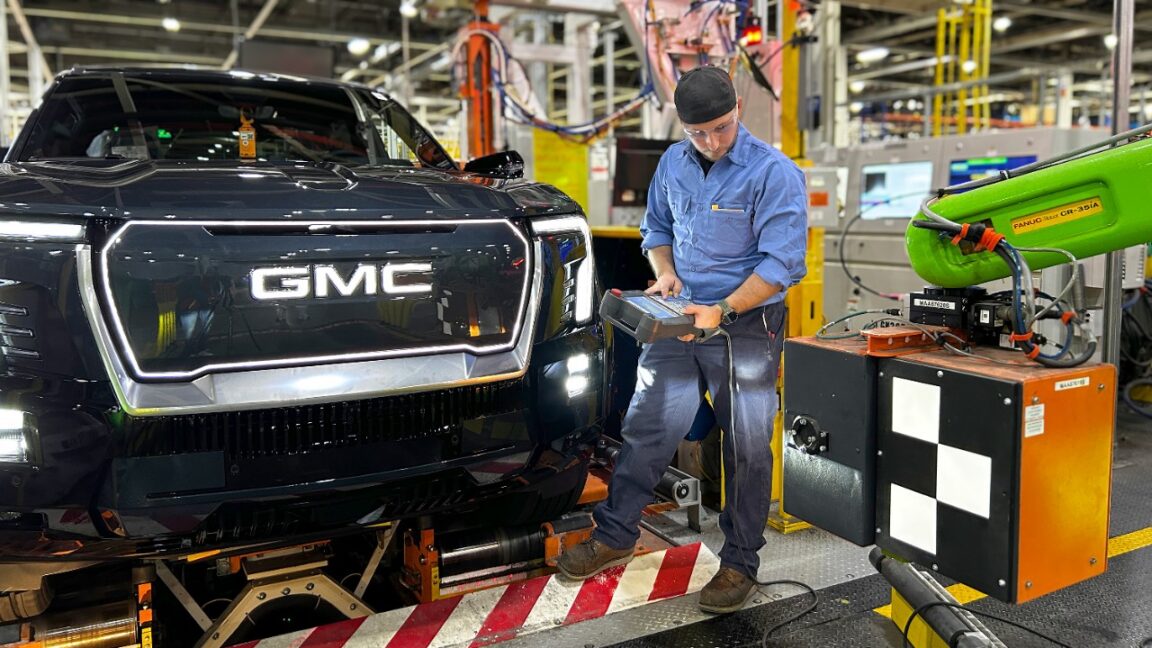
General Motors installed 50 new robot arms at its Factory Zero in Detroit, displacing 1,300 workers. This move sparked outrage from the United Auto Workers union, which questioned the company's prioritization of automation over rehiring laid-off employees.
General Motors has installed 50 new robot arms at its Factory Zero electric vehicle plant in Detroit, a move that has drawn strong criticism from the United Auto Workers (UAW) union. This automation push comes while 1,300 workers remain laid off from the factory, despite earlier suggestions that the layoffs would be temporary. The UAW argues that GM should prioritize re-employing these workers instead of investing in further automation.
Automakers worldwide are increasingly adopting automation, with companies like Stellantis NV and Ford Motor Company already deploying similar robot arms. Hyundai Motor Company plans to introduce Boston Dynamics' Atlas humanoid robots in its Georgia EV facility by 2028. This trend highlights a broader industry shift towards automated production lines to increase efficiency and reduce labor costs.
However, this widespread adoption of robotics in manufacturing has ignited a debate about its impact on the workforce. Union organizers like Andrew Bergman emphasize that while technological advancements can make work safer and potentially lead to shorter workweeks, corporations often use them to boost profits and lay off employees. This tension between technological progress and job security is a growing concern for many workers in the automotive sector.
Countries in East Asia, particularly China, are leading the way in establishing "dark factories" – highly automated facilities with minimal human intervention. Chinese automakers like Jetour and Zeekr operate such factories, capable of producing hundreds of thousands of vehicles annually. Even smartphone maker Xiaomi has an EV Hyperfactory in Beijing that produces a new electric vehicle every 76 seconds, demonstrating the scale of automation being achieved.
Despite the clear benefits in terms of production capacity and lower labor costs, fully automated factories present certain vulnerabilities. Experts point out that humans are often better at identifying and resolving unexpected issues on a production line. Cybersecurity also becomes a more critical concern in heavily automated, AI-powered facilities. Nevertheless, many companies see the advantages outweighing these risks, especially as China continues to heavily invest in AI and robotics as a core part of its economic strategy.
Related articles
We Added Too Many Guardrails and Broke Our Own Agent, Our AI VP of Finance Found a Setting We’d Missed for 8 Years, and an Agent Is Now the One Renewing Your Software: The Agents #007
This article discusses the complexities and unexpected breakthroughs encountered while deploying AI agents in a business setting. It highlights the critical balance in setting guardrails for AI, the diverging behaviors of agents across different platforms, and the surprising efficiency gains from integrating AI with existing financial tools.
Fika Jobs raises $4M to build a video-first hiring platform where AI agents interview candidates
Fika Jobs, a Stockholm-based startup, secured $4 million in pre-seed funding to advance its video-first hiring platform. This platform uses AI agents to conduct interviews and create short video profiles for job seekers, aiming to revolutionize the traditional recruitment process.
 Business & Startups
How to burst the AI bubble: Strike at its roots
Cory Doctorow