
How some data center operators are tackling their water use problems
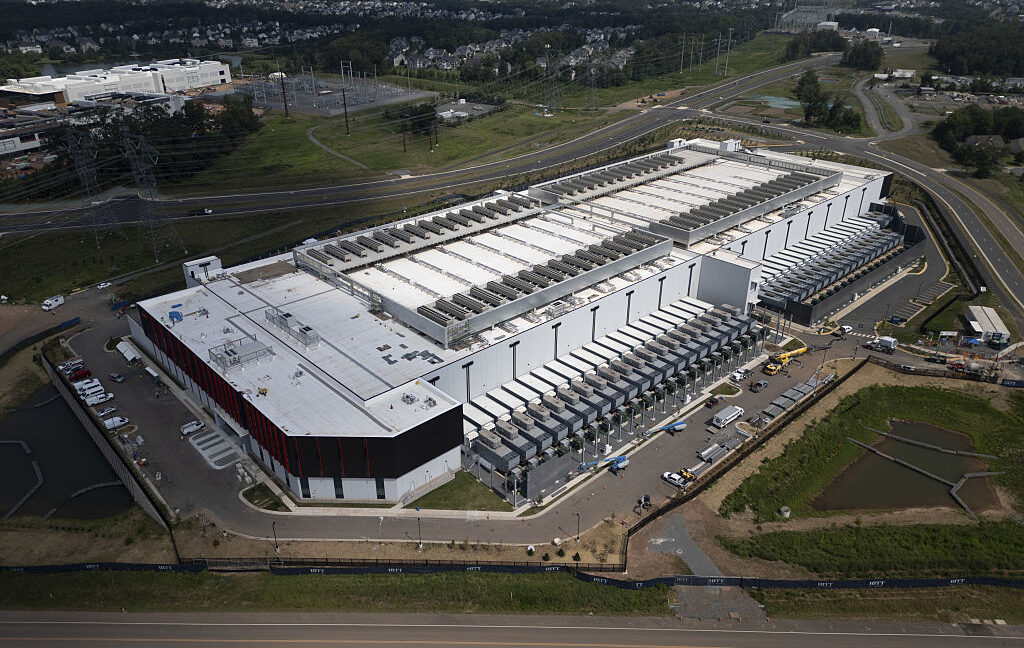
Data center operators are grappling with increasing scrutiny over their substantial water consumption, primarily for cooling. While some companies are abandoning water-intensive cooling methods, Google advocates for a nuanced approach, optimizing cooling strategies based on local water availability to balance water conservation with energy efficiency. This issue highlights the complex trade-offs between water use and power consumption in the tech industry. This issue highlights the complex trade-offs between water use and power consumption in the tech industry. Concerns about water scarcity are increasingly impacting data center development, prompting diverse strategies from tech companies. Some seek to reduce or eliminate evaporative cooling, while others, like Google, propose tailored approaches that consider regional water resources to balance environmental impact with operational needs.
The rapid expansion of data centers, crucial infrastructure for the AI boom, is facing significant challenges due to their substantial water consumption. This issue is becoming increasingly contentious, with recent polls indicating public opposition to data center development primarily due to water scarcity concerns. Tech giants are under pressure to address these environmental impacts.
Data centers primarily use water for cooling server racks, which generate immense heat. Evaporative cooling, a common technique, uses fresh water that evaporates to dissipate heat. While this method can save money and reduce emissions by lessening the power needed for energy-intensive recirculation pumps, it also carries a considerable water footprint. For instance, Google's Iowa facility consumed over a billion gallons in 2024 using this method.
Projections indicate that hyperscale data centers could consume up to 33 billion gallons of water by 2030 if they continue to rely heavily on evaporative cooling. This substantial demand, while comparable to other water-intensive industries, poses a significant risk in regions already experiencing water stress, especially during peak summer demand when municipal water use also spikes.
In response to these concerns, some tech companies, including Microsoft, OpenAI, and Oracle, are moving away from evaporative cooling. Conversely, Google is adopting a different strategy, emphasizing a "data-driven framework" to assess cooling designs based on local watershed conditions. They argue that a one-size-fits-all approach is ineffective given the regional variations in water availability.
Experts highlight a critical trade-off between water and power consumption. Avoiding evaporative cooling entirely can lead to increased power usage, potentially driving up costs and carbon emissions, especially if data centers rely on non-renewable energy sources for cooling. This underscores the complexity of balancing environmental impact with operational efficiency in data center design.
Despite ongoing efforts, tech companies continue to face difficulties in curbing water use. Past incidents, such as Google halting data center plans in Chile due to water concerns, illustrate the real-world consequences. The evolving landscape necessitates innovative and localized solutions to manage the interconnected challenges of water scarcity, energy consumption, and sustainable data center growth.
Related articles
We Added Too Many Guardrails and Broke Our Own Agent, Our AI VP of Finance Found a Setting We’d Missed for 8 Years, and an Agent Is Now the One Renewing Your Software: The Agents #007
This article discusses the complexities and unexpected breakthroughs encountered while deploying AI agents in a business setting. It highlights the critical balance in setting guardrails for AI, the diverging behaviors of agents across different platforms, and the surprising efficiency gains from integrating AI with existing financial tools.
Fika Jobs raises $4M to build a video-first hiring platform where AI agents interview candidates
Fika Jobs, a Stockholm-based startup, secured $4 million in pre-seed funding to advance its video-first hiring platform. This platform uses AI agents to conduct interviews and create short video profiles for job seekers, aiming to revolutionize the traditional recruitment process.
 Business & Startups
How to burst the AI bubble: Strike at its roots
Cory Doctorow