
SpaceX is now a public company valued for its AI potential, so what comes next?
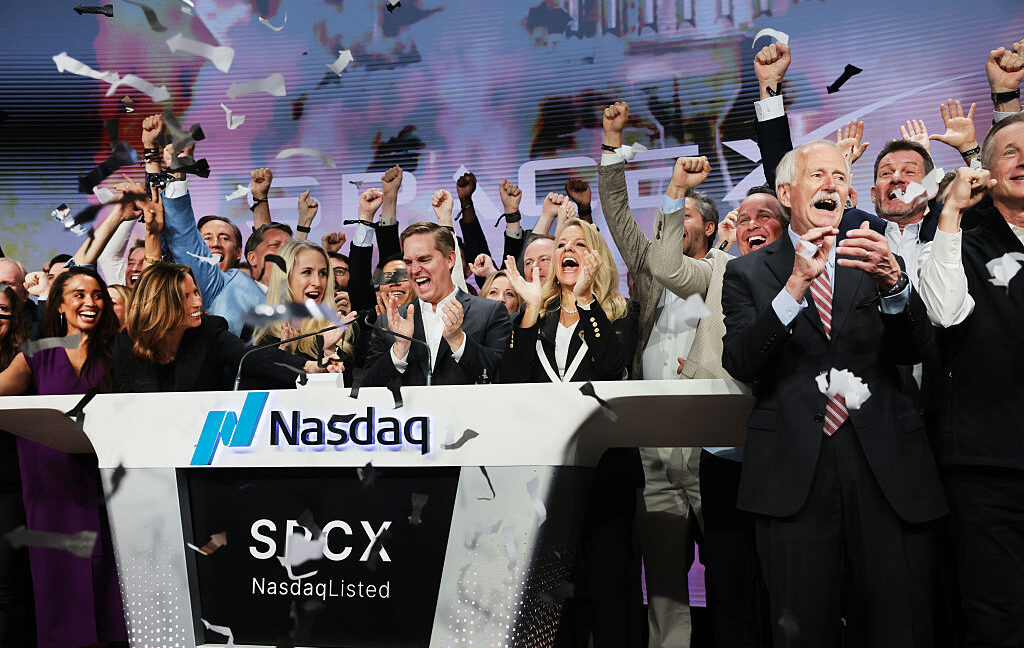
SpaceX, now publicly traded at a $1.8 trillion valuation, emphasizes AI services from space as its primary value driver, not traditional space ventures. This shift raises questions about SpaceX's future priorities, particularly concerning its commitment to NASA's ambitious lunar programs amid increasing investor focus on AI-driven profitability.
SpaceX, founded nearly a quarter-century ago, recently became a publicly traded company on the NASDAQ exchange. Its shares launched at $135 and closed over 19 percent higher at $160.95, valuing the company at nearly $1.8 trillion. This move instantly made founder Elon Musk a multi-trillionaire on paper and created thousands of new millionaires among current and former employees.
There is ongoing debate about whether SpaceX's valuation is justified, with some seeing it as a valuable opportunity to invest in a dominant space company, while others view it as inflated. Nevertheless, becoming public means SpaceX will face increased scrutiny and public disclosure. While Elon Musk retains control, the company's stock performance will now be a significant factor.
Surprisingly, most shareholders are not investing in SpaceX for its long-term space exploration goals like Mars colonization or lunar missions with NASA. The company's S-1 filing revealed that less than 7 percent of its value comes from "space-enabled solutions" or its Starlink internet constellation. Instead, SpaceX and Musk see the majority of its value in providing AI services, particularly for enterprise applications from space.
This shift towards AI-driven profitability presents a dilemma for NASA. The space agency heavily relies on SpaceX for astronaut transport, critical science payloads, and the Artemis lunar program. However, SpaceX's lucrative AI compute contracts, valued in the tens of billions, now overshadow NASA's $2.9 billion Human Landing System contract.
NASA faces a critical juncture, needing SpaceX to deliver on Artemis milestones and develop lunar landing capabilities. The development of the massive Starship rocket is central to this. However, with investors focused on profit, SpaceX may prioritize launching more Starlink satellites and testing data center satellites over NASA-related launches, such as orbital refueling demonstrations or uncrewed lunar landing tests. The question remains: will SpaceX follow the money or prioritize its commitments to space exploration?
Related articles
We Added Too Many Guardrails and Broke Our Own Agent, Our AI VP of Finance Found a Setting We’d Missed for 8 Years, and an Agent Is Now the One Renewing Your Software: The Agents #007
This article discusses the complexities and unexpected breakthroughs encountered while deploying AI agents in a business setting. It highlights the critical balance in setting guardrails for AI, the diverging behaviors of agents across different platforms, and the surprising efficiency gains from integrating AI with existing financial tools.
Fika Jobs raises $4M to build a video-first hiring platform where AI agents interview candidates
Fika Jobs, a Stockholm-based startup, secured $4 million in pre-seed funding to advance its video-first hiring platform. This platform uses AI agents to conduct interviews and create short video profiles for job seekers, aiming to revolutionize the traditional recruitment process.
 Business & Startups
How to burst the AI bubble: Strike at its roots
Cory Doctorow