
Google’s AI buildout drove 37% increase in electricity use in 2025
Google's electricity consumption surged by 37% in 2025, driven by its AI expansion and data center buildout. Despite this, Google claims to have reduced operational carbon emissions through massive clean energy purchases, though its overall carbon footprint still increased due to supply chain emissions.
Google's electricity consumption rose by an unprecedented 37 percent in 2025, the largest increase in the company's history. This surge is primarily attributed to the ongoing expansion of its AI infrastructure, Google Cloud, and YouTube, with data centers consuming over 42 million megawatt-hours. This level of energy usage now rivals that of entire countries, highlighting the significant environmental impact of the AI buildout. The company acknowledges that its total electricity usage has increased by more than 250 percent since 2019, reflecting an accelerating trend. Despite this, Google reported a 2 percent reduction in its operational emissions over the same period, attributing this to its continued investment in clean energy.
Google has been matching 100 percent of its electricity consumption with renewable energy purchases for nine years. In 2025, its purchase agreements for 12 gigawatts of “net-new clean energy” marked the largest annual total in its history. The company is now emphasizing a “24/7 carbon-free energy ambition” to ensure hourly and local matches for clean energy, addressing concerns that companies can claim 100% renewable power while still relying on fossil fuels locally.
However, Google's supply chain emissions increased by 25 percent due to reliance on grids in the Asia-Pacific region that are undersupplied with carbon-free energy. This led to an 18 percent increase in Google’s total “ambition-based emissions” between 2024 and 2025. The company’s overall carbon footprint for 2025 reached approximately 14.5 million metric tons of carbon dioxide equivalent.
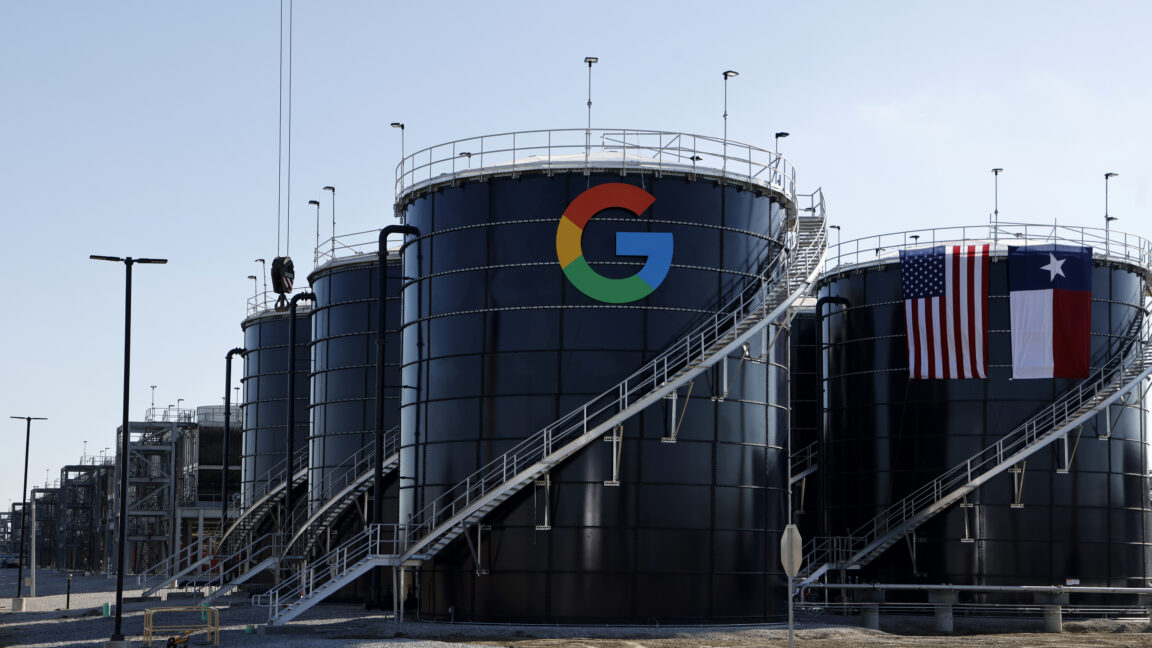
While Google is a major investor in clean energy technologies, including advanced nuclear, fusion, and geothermal, there are concerns about its continued reliance on natural gas. A significant investment in Texas data centers reportedly includes plans for a 933-megawatt natural gas power plant without carbon capture technology. This could generate 4.5 million tons of carbon dioxide annually, raising questions about the company's long-term environmental commitments despite its massive clean energy purchases.
Related articles
Mark Zuckerberg tells staff that AI agents haven’t progressed as quickly as he’d hoped
Mark Zuckerberg admitted to Meta employees that AI agent development hasn't met expectations, despite significant investments. He anticipates improvements in the next three to six months as the company adapts to an AI-focused structure.
 Business & Startups
Achieving operational excellence with AI
AI is transforming traditional process excellence frameworks like Lean Six Sigma and BPM, with market projections indicating significant growth in AI-powered optimization. Businesses with mature process disciplines are better positioned to leverage AI for impactful outcomes. Integrating AI into existing frameworks accelerates efficiency and innovation, highlighting technology and process as intertwined for optimal results. Organizations that combine these elements effectively achieve superior operational performance.
 Business & Startups
Trump gets OpenAI to offer US 5% stake, far lower than Sanders’ target
OpenAI is in talks with the Trump administration to offer the US a 5% stake in the company, aiming to share AI’s benefits and counter public skepticism. This proposal, however, falls short of Senator Bernie Sanders’ vision for a significantly larger public stake to ensure broader societal benefits and control.