

The pulse of artificial intelligence — every single day.
Curated AI news, research, tools and analysis from the world's leading sources — for builders, researchers and creators everywhere.
Latest stories
We Added Too Many Guardrails and Broke Our Own Agent, Our AI VP of Finance Found a Setting We’d Missed for 8 Years, and an Agent Is Now the One Renewing Your Software: The Agents #007
This article discusses the complexities and unexpected breakthroughs encountered while deploying AI agents in a business setting. It highlights the critical balance in setting guardrails for AI, the diverging behaviors of agents across different platforms, and the surprising efficiency gains from integrating AI with existing financial tools.
Fika Jobs raises $4M to build a video-first hiring platform where AI agents interview candidates
Fika Jobs, a Stockholm-based startup, secured $4 million in pre-seed funding to advance its video-first hiring platform. This platform uses AI agents to conduct interviews and create short video profiles for job seekers, aiming to revolutionize the traditional recruitment process.
Build real agentic apps using CUGA: two dozen working examples on a lightweight harness
CUGA, IBM's open-source Agent Harness, simplifies building agentic applications by handling infrastructure, allowing developers to focus on tools and prompts. It offers pre-assembled components for planning, execution, and state management, significantly reducing development time. CUGA has topped agent benchmarks like AppWorld and WebArena.
 Business & Startups
How to burst the AI bubble: Strike at its roots
Cory Doctorow
 Business & Startups
The $400 million machine powering the future of chipmaking
ASML, a Dutch company, is critical to the microchip industry, manufacturing advanced lithography machines vital for producing powerful chips for AI and smartphones. Their new $400 million machine, with 8-nanometer resolution, helps maintain Moore’s Law and meets the increasing demand for denser chips in the AI industry.
The running list: major tech layoffs in 2026 where employers cited AI
Major tech companies like Oracle, GitLab, and Google are implementing significant layoffs in 2026, often citing AI as a primary reason for workforce reductions. Despite many reporting record revenues, these companies are restructuring and reallocating resources to focus on AI integration and efficiency, raising questions about the true impact of AI on employment in the tech sector.
OpenAI launches new initiative to help find and patch open source bugs
OpenAI has launched "Patch the Planet," a new initiative in partnership with cybersecurity firm Trail of Bits, to enhance the security of open-source projects. This program aims to assist maintainers in identifying and patching bugs, utilizing OpenAI's AI-powered security tools while reducing the burden on project teams.
How Omio is building the future of conversational travel
Omio, a leading travel platform, partners with OpenAI to revolutionize travel planning through conversational AI. This collaboration enhances customer experience by allowing natural language queries for booking and significantly boosts internal efficiency, reducing product development time.
 Business & Startups
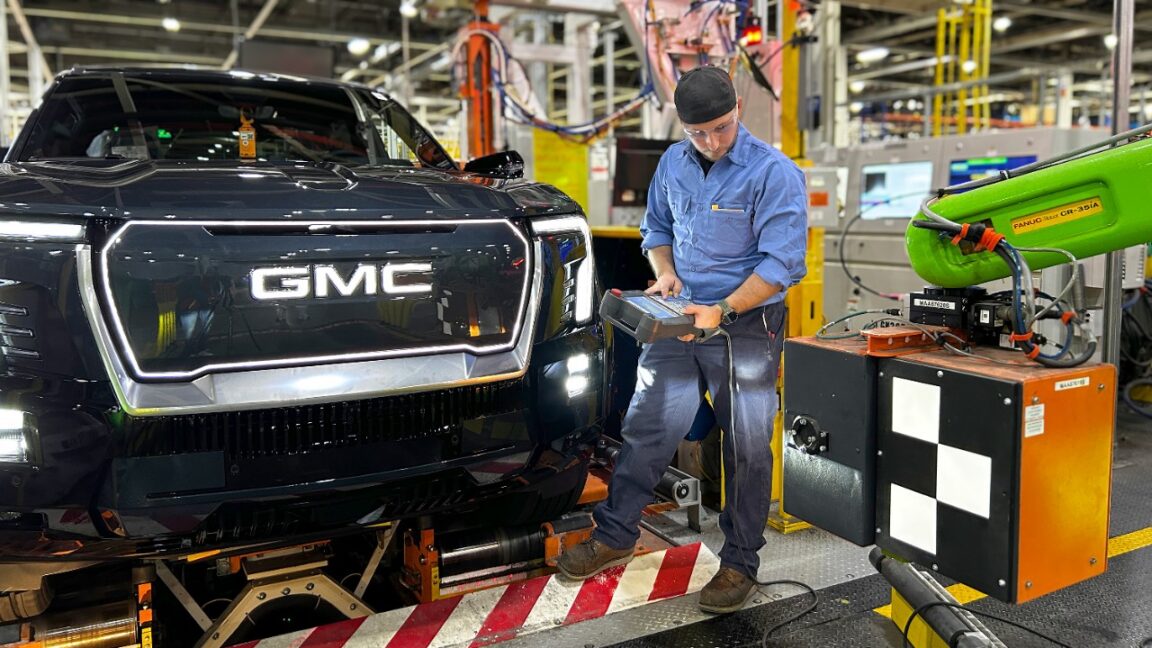
GM installs robots at flagship EV factory after laying off 1,300 workers
General Motors installed 50 new robot arms at its Factory Zero in Detroit, displacing 1,300 workers. This move sparked outrage from the United Auto Workers union, which questioned the company's prioritization of automation over rehiring laid-off employees.
The AI world is getting ‘loopy’
AI models are taking a significant leap forward with the adoption of "agentic loops," where AI agents continuously prompt each other to improve code and solve complex problems. This approach, though potentially resource-intensive, promises to unlock new levels of autonomous problem-solving and efficiency in AI applications.
Three things to watch amid Anthropic’s latest feud with the government
Anthropic’s AI model, Fable, designed for coding and cybersecurity, was flagged as a national security threat by the US government, leading to export controls and the model’s withdrawal. This event highlights challenges for American AI companies, potentially leading to reliance on foreign models, and sparks debate on cybersecurity vulnerabilities and the future of AI regulation.
 Business & Startups
Salesforce at 3.1x ARR, HubSpot Down 56%, Adobe at 11x Earnings: Are They Just Too Oversold Now?
The SaaSpocalypse, a period of significant B2B software market decline due to AI fears, is over. However, iconic leaders like Salesforce, HubSpot, and Adobe have lagged in recovery, raising questions about whether they are oversold and if their AI initiatives can drive growth beyond traditional per-seat models.
 Business & Startups
How Anthropic may have talked itself into an AI export ban
Anthropic's frequent warnings about advanced AI risks, significantly more than OpenAI, are being scrutinized after a US ban on foreign access to its latest models, Mythos and Fable. Critics suggest the company's "fear-mongering" may have inadvertently led to these restrictions, sparking debate on AI regulation and international access to powerful models.
PP-OCRv6 on Hugging Face: 50-Language OCR from 1.5M to 34.5M Parameters
Baidu has released PP-OCRv6, an advanced optical character recognition (OCR) model supporting 50 languages. Available on Hugging Face, this version significantly improves accuracy and efficiency across various parameter sizes, from 1.5 million to 34.5 million, marking a substantial leap in multilingual OCR technology.
Daybreak: Tools for securing every organization in the world
Daybreak is expanding to democratize automated patching of vulnerable software, with new AI tools and partnerships transforming cybersecurity. This initiative aims to accelerate identifying and fixing vulnerabilities at machine speed, shifting the focus from discovery to rapid remediation.
Patch the Planet: a Daybreak initiative to support open source maintainers
Daybreak
Rippling’s AI Bet: The Data Graph Is the Moat
Rippling has developed a unified data graph to power its AI, offering a significant advantage over competitors with fragmented data systems. This integrated approach allows their AI to move beyond insights to taking accurate, trusted actions and proactive workflows within their HR and IT platform.
Codex-maxxing for long-running work
Codex is increasingly being used by organizations to support long-running projects that go beyond a single prompt. This whitepaper by Jason Liu offers practical strategies for leveraging Codex as a persistent workspace, managing complex workflows and sustaining progress.
Samsung Electronics brings ChatGPT and Codex to employees
Samsung Electronics is deploying ChatGPT Enterprise and Codex to its global workforce, marking one of OpenAI's largest enterprise launches. This initiative aims to integrate AI across all operations, from R&D to marketing, boosting productivity and problem-solving capabilities.
When the Trump administration cracks down on Anthropic, who benefits?
The Trump administration issued an export control order against Anthropic, forcing the AI company to pull its newest models, Fable 5 and Mythos 5, offline. This move has sparked debate over AI policy and digital sovereignty, with some suggesting political motivations and others questioning Anthropic’s own messaging around AI safety.
Beyond Siri: Here are the practical AI features coming to your iPhone in iOS 27
Apple is integrating practical AI features into iOS 27 beyond a revamped Siri, focusing on enhancing existing apps and solving real-world problems. These features, powered by Apple Intelligence, include bill splitting, automated password updates, and smart suggestions in Messages.
Signal’s Meredith Whittaker wants you to remember that AI chatbots ‘are not your friends’
Signal President Meredith Whittaker cautions against the over-reliance on AI chatbots, emphasizing they are not sentient and can pose significant privacy risks. She highlights concerns about pervasive data access when integrating AI into personal and sensitive applications.
In the Weights is your new AI-centric vanity search
In the Weights is a new AI-centric vanity search engine that measures how well AI models recall information about individuals without relying on traditional web searches. It queries various LLMs and assigns a "strength score" based on their ability to retrieve and describe personal data.
Nobel laureate John Jumper is leaving DeepMind for rival Anthropic
Nobel laureate John Jumper is departing Google DeepMind to join its competitor, Anthropic, after dedicating nearly nine years to DeepMind, where he led the AlphaFold team. Jumper, who shared a Nobel Prize for his work on AlphaFold, expressed gratitude for his time at DeepMind while looking forward to new endeavors.
90%+ of VP+ Candidates Can’t Tell Me What They’ve Learned After 10 Interviews. That’s a Disqualifier.
This article highlights the critical importance of a candidate's curiosity and in-depth understanding of a company during executive-level interviews. It emphasizes that top candidates go beyond surface-level information to uncover real business challenges and opportunities.
Lightfield Just Assembled a Working CRM Live On Stage, Then Unstuck a Stalled Deal in 3 Minutes
Lightfield’s AI-native CRM redefines customer relationship management by automating data entry, diagnosing stalled deals, and generating new leads in real-time. It moves beyond traditional CRMs by operationalizing best practices and leveraging AI to streamline sales workflows.
Diffusion Language Models: An Experimental Analysis
Research published on arXiv explores Diffusion Language Models through an experimental analysis. This paper, authored by Thomas Bertolani and a team, delves into the technical aspects of these models.
Hidden Anchors in Multi-Agent LLM Deliberation
A new paper explores "hidden anchors" in multi-agent LLM deliberation, focusing on how these models arrive at conclusions through complex interactions. This research delves into the internal mechanisms of large language models when engaged in collaborative decision-making processes.
From PGP to Mythos: a brief history of export controls that didn’t stop anyone
The US government recently restricted Anthropic from exporting its powerful AI models, Fable and Mythos, highlighting a new attempt to control advanced AI through export regulations. This event draws parallels with past, often unsuccessful, government efforts to control technologies like encryption and spyware.
Snowflake’s CMO Runs Marketing for 700 People. She Starts Her Day By Talking to Her Data, Not a Dashboard.
Snowflake's CMO, Denise Persson, has transformed her marketing operations by leveraging AI to directly interrogate data, eliminating the need for traditional dashboards and fostering a data-driven culture. This shift has led to significant efficiencies, including a 30% reduction in cost per opportunity, and is reshaping team dynamics and hiring profiles within the organization. The company emphasizes robust data governance and a centralized AI engineering team to ensure responsible and effective agent deployment across sales and marketing.
Is the US government’s Anthropic ban accidentally helping the brand?
The U.S. government forced Anthropic to withdraw its Fable 5 and Mythos 5 AI models due to national security concerns, following reports of researchers bypassing Fable 5's safeguards. This controversial ban has sparked debate among cybersecurity experts and raised questions about its implications for developers and Anthropic's market position, with some suggesting it could unintentionally benefit the company.
The US banned Anthropic’s Fable 5 release, but the numbers don’t seem to care
The US government banned Anthropic from releasing its new Fable 5 and Mythos 5 AI models due to national security concerns, following reports of a bypass in Fable 5's guardrails. This decision has sparked debate among cybersecurity researchers and raises questions about its impact on developers and Anthropic's market trajectory.
Billionaire Ambani wants AI in every call, app, and home
Mukesh Ambani’s Reliance Industries is rapidly expanding its AI offerings across India, introducing AI assistants for calls, apps, and smart home devices. This strategic push aims to establish Reliance as a national leader in AI, reduce reliance on foreign technology, and drive growth ahead of Jio’s anticipated IPO.
 Business & Startups
VCs Are Diversified, Yes. But That Also Means They Need a Constant Stream of Hits. Like Netflix. Every Single Year.
Many founders believe venture capitalists (VCs) are lucky due to diversification in their portfolios. However, the reality of VC fund math reveals a constant need for significant "hits" to generate returns, similar to how movie studios require blockbusters.
The CEO of Allbirds’ new AI biz has a plan, but no team
Allbirds, formerly a shoe company, has rebranded as Smartbird and pivoted to become an AI infrastructure provider. CEO Nadia Carlsten aims to build a team and offer specialized AI compute solutions for companies prioritizing data sovereignty.
A startup claims it broke through a bottleneck that’s holding back LLMs
A new AI startup, Subquadratic, claims to have overcome a decade-long mathematical bottleneck in large language models with its new SubQ model. Independent evaluations suggest SubQ is faster, cheaper, uses less energy, and processes significantly more text than other models, potentially revolutionizing LLM architecture.
Exposing the Unsaid: Visualizing Hidden LLM Bias through Stochastic Path Aggregation
Researchers have developed a new method called Stochastic Path Aggregation (SPA) to visualize and identify hidden biases within Large Language Models (LLMs). This technique helps to expose the "unsaid" biases that LLMs may exhibit, offering a clearer understanding of their internal workings. The paper, "Exposing the Unsaid: Visualizing Hidden LLM Bias through Stochastic Path Aggregation," provides a novel approach to addressing fairness and transparency in AI. This research aims to make LLMs more interpretable and reliable by bringing to light their embedded biases.
DeXposure-Claw: An Agentic System for DeFi Risk Supervision
DeXposure-Claw is an agentic system designed for risk supervision within the Decentralized Finance (DeFi) ecosystem. This research paper, authored by Aijie Shu and a team of collaborators, explores its functionalities and implications.
Salesforce CodeGen Tutorial: Generate, Validate, and Rerank Python Functions With Unit Tests and Safety Checks
This tutorial guides users through an advanced workflow for Salesforce CodeGen, demonstrating how to generate Python functions from natural language prompts. It covers essential steps beyond basic inference, including function extraction, safety checks, unit-test-based validation, and candidate reranking for robust code generation. The article explains how CodeGen can be used to create comprehensive, evaluated, and filtered coding solutions, not just for code completion.
Source: Elastic agrees to buy CRV-backed DeductiveAI for up to $85M
Elastic is acquiring DeductiveAI, a startup specializing in AI-powered software bug resolution, for up to $85 million. This acquisition will enhance Elastic's observability platform by integrating AI to automatically monitor performance and resolve system failures.
 Business & Startups
As China looms, Taiwan makes more drones for defense and the US military
Taiwan is significantly increasing its domestic drone production for national defense and international sales, aiming to deter potential Chinese invasion. This initiative includes a substantial budget proposal for military drones and partnerships with international buyers, including the US military.
AI inference startup Baseten reportedly raising $1.5B months after its last mega-round
Baseten, an AI inference startup, is reportedly nearing a $1.5 billion funding round at a $13 billion valuation, a significant jump from its $5 billion valuation just five months prior. This new round, if finalized, would mark a 160% valuation increase in under half a year, fueled by a competitive "inference gold rush" in the AI industry.
Snap spins off AI video team into new company, Dotmo, due to costs
Snap has spun off its internal generative AI video team into a new company called Dotmo, aiming to develop AI models for interactive gaming experiences. This move is driven by high internal costs and allows Snap to maintain an equity stake and technology license with the new venture.
OpenAI is bringing on some big guns in the lead-up to its IPO
OpenAI is strengthening its team by hiring Google DeepMind AI legend Noam Shazeer and former Trump White House AI policy official Dean Ball in preparation for its public listing. These strategic hires aim to bolster both the technical expertise and policy influence of the company as it navigates the complex landscape of AI development and governance. With Shazeer
Almost half of US singles feel negatively about AI in dating, Match says
A new study by Match Group reveals that nearly half of US singles view AI in dating negatively, despite dating apps increasingly integrating AI features. While direct romantic involvement with AI is widely rejected, singles are open to AI tools that assist with profile enhancement and conversation starters.
Amazon hopes to challenge Nvidia more directly by selling its AI chips
Amazon Web Services (AWS) is reportedly in discussions to sell its Trainium AI chips to other companies, potentially establishing a new $50 billion market. This move could position Amazon as a more direct competitor to Nvidia in the lucrative AI chip sector.
MosaicLeaks: Can your research agent keep a secret?
Research agents combining private documents with web tools risk leaking sensitive information through external queries. MosaicLeaks introduces a task to measure this "mosaic effect" leakage across three levels: intent, answer, and full-information. Training only for task performance worsens leakage, while a new privacy-aware training method significantly reduces it while improving accuracy.
 Business & Startups
Bernie Sanders unveils $7 trillion plan to give Americans control of AI industry
Senator Bernie Sanders has proposed a bold plan to redistribute wealth from the AI industry to the American public, aiming to provide direct payments and fund public programs through a sovereign wealth fund. The legislation also seeks to give the public a direct say in corporate AI decisions, sparking debate among AI leaders and policymakers. The proposal faces an uphill battle given the current political climate.
New usage analytics and updated spend controls for enterprises
ChatGPT Enterprise now offers new usage analytics and enhanced spend controls, providing administrators with greater visibility and management capabilities for their AI deployments. These tools allow businesses to track credit consumption, understand adoption patterns, and optimize AI investments across their organizations.
 Tools & Platforms
Managing Downstream Dependencies with the AI Engineer
AI code assistants excel at generating code but struggle with understanding organizational dependencies, often leading to broken functionalities. This article explores how Postman can serve as a vital context layer, providing AI with the necessary dependency graph to make safe and effective changes.
Improving health intelligence in ChatGPT
GPT-5.5 Instant significantly improves ChatGPT's health intelligence, making it better at recognizing urgent care needs and explaining complex medical information. This advancement, driven by model capabilities and physician-led evaluations, benefits over 230 million weekly users seeking health advice.
Using AI to help physicians diagnose rare genetic diseases affecting children
A new study demonstrates how AI can aid in diagnosing rare genetic diseases in children. By reanalyzing previously unsolved cases, an OpenAI reasoning model helped identify 18 new diagnoses, showcasing the potential of AI-assisted research workflows.
The 5 Most Disastrous API Vulnerabilities
This article identifies five critical API vulnerabilities that, while not always the most common, can lead to severe business, security, and infrastructure damage. It details how issues like Broken Object-Level Authorization (BOLA) and Remote Code Execution (RCE) pose significant threats by exploiting legitimate processes or gaining deep system access. The piece aims to help API providers and security teams prioritize risks based on potential impact rather than mere frequency. It highlights that the most disastrous API vulnerabilities can result in large-scale data breaches, privilege escalation, compromised infrastructure, ransomware, or financial fraud, often by exploiting authorized methods, underscoring the need for advanced cybersecurity measures like identity-based access control and anomaly detection systems.
How to turn off AI in your Google Docs
Google Docs now features AI writing assistance, which some users find disruptive. This article outlines how to disable these features to restore a seamless writing experience in Google Docs.
Beyond LoRA: Can you beat the most popular fine-tuning technique?
This article explores recent advancements in large language model (LLM) fine-tuning techniques, specifically focusing on alternatives to the widely-used LoRA method. It delves into new research that aims to surpass LoRA's efficiency and performance by introducing innovative approaches to adapt pre-trained models for specific tasks.
Is it agentic enough? Benchmarking open models on your own tooling
This article introduces a new methodology for benchmarking open-source models, focusing on the efficiency and effort required by AI agents to achieve a task, rather than just the final outcome. It highlights the importance of designing APIs and documentation to be "agent-friendly" to optimize performance and reduce computational costs for agents.
NEA’s Tiffany Luck says enterprises are still figuring out their AI ROI
NEA partner Tiffany Luck discusses the ongoing challenge for enterprises to measure the return on investment (ROI) for their AI spending. Many companies initially overspent on AI, leading to budget cuts, and are now seeking solutions to track their AI expenditures and prove value.
 Research & Papers
AI coding agents taught robots how to install GPUs and cut zip ties
Nvidia researchers have developed ENPIRE, an AI agent harness framework, that allows AI coding agents to autonomously train robots. These agents have successfully taught robots complex tasks like inserting GPUs and cutting zip ties, achieving high success rates.
World leaders want American AI. They just don’t want America to be able to turn it off.
International leaders are concerned the U.S. could restrict access to its advanced AI models, citing a recent incident where Anthropic models were blocked. This has sparked discussions about digital sovereignty and the need for a "trusted partners" scheme to ensure stable access to AI technologies.
 Research & Papers
"Dangerous" AI models are coming no matter what
Anthropic recently took its Claude Fable 5 and Mythos 5 AI models offline due to a US government export-control directive. This move highlights a broader challenge: advanced AI capabilities are becoming widespread, raising concerns about national security and the dual-use nature of these powerful tools.
Stay ahead, weekly.
The most important AI updates of the week, delivered in five minutes. No fluff, no noise.